
Tools for Side Hustlers to Find Profitable Affiliate Products Evaluation Checklist
Discover the best tools and practical evaluation checklist for side hustlers to find high-converting, high-payout SaaS and digital affiliate products fast.
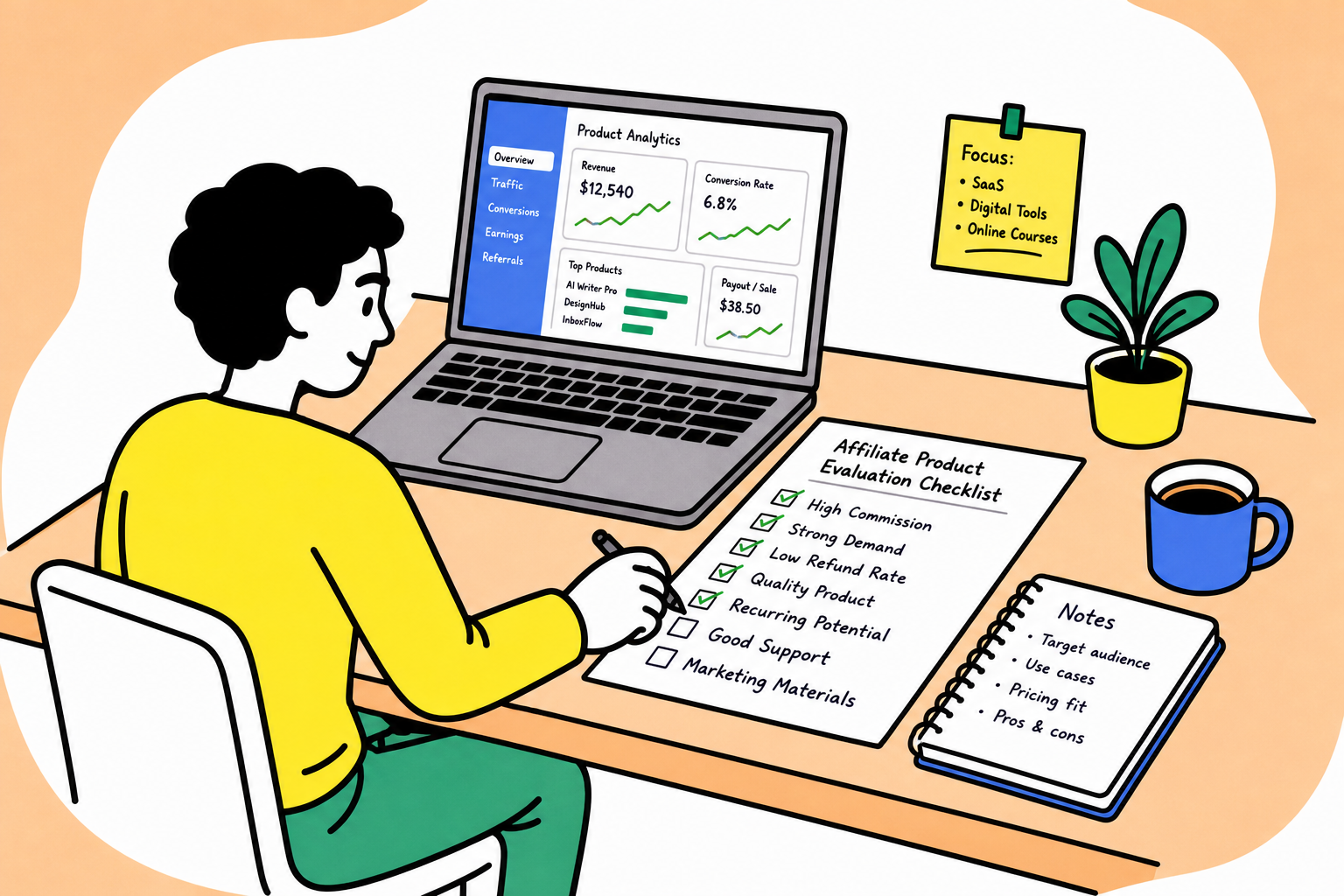
- The Side Hustler’s Core Constraint: Efficiency vs. Margin
- Category 1: Affiliate Discovery Directories and Aggregators
- Category 2: Link Scanners and In-Content Opportunity Tools
- Category 3: Sub-Affiliate and Auto-Monetization Networks
- Category 4: Direct High-Yield Marketplaces
- The Tool Evaluation Checklist for Side Hustlers
- The Product Evaluation Checklist (Once You Find an Opportunity)
- Myth-Busting: You Do Not Need Enterprise SEO Tools to Find Good Products
- A Side Hustle Scenario: Finding a High-Paying Software Affiliate
- Expanding Your Reach: Avoiding Program Dependency
- Frequently Asked Questions (FAQ)
- Finalizing Your Discovery Workflow
The most significant constraint you face as a side hustler isn't a lack of traffic or an inability to write compelling content. It is a severe lack of time. You do not have forty hours a week to manually scrape the internet, sign up for dozens of disjointed affiliate networks, and wait weeks for approval just to find out a merchant pays a dismal 2% commission with a 24-hour cookie.
When you are building a niche site, a YouTube channel, or an email newsletter in the margins of your day, every hour spent hunting for monetization opportunities is an hour stolen from content creation and audience building.
To bridge this gap, you need a streamlined stack of discovery tools and a rigorous evaluation framework. You need systems that surface high-converting, high-payout products—specifically SaaS and digital goods—without forcing you through a labyrinth of non-disclosure agreements and cluttered network interfaces.
This guide breaks down the specific categories of tools available for finding profitable affiliate products, how to evaluate them based on your limited time and budget, and the exact checklist you should use to vet the products they surface.
The Side Hustler’s Core Constraint: Efficiency vs. Margin
Before evaluating specific tools, we need to establish what makes a tool genuinely useful for someone operating on limited time. The traditional affiliate marketing playbook dictates that you should go to Google, type in "[Your Niche] + affiliate program," and click through the first five pages of results.
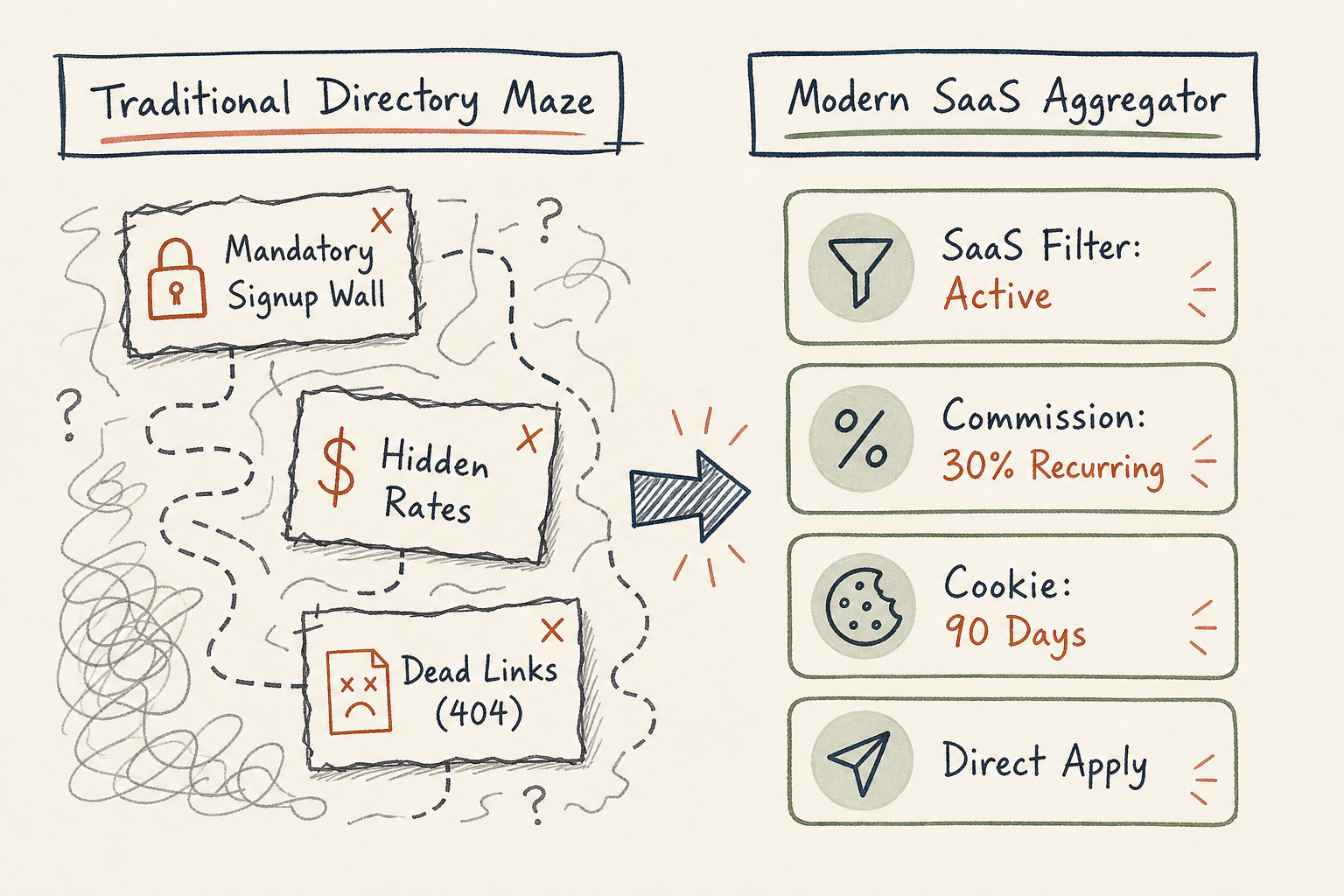
This "spray and pray" method is incredibly inefficient. It leads you to outdated blog posts, defunct programs, and networks that hide their payout structures behind mandatory signup walls.
For a side hustler, an effective discovery tool must solve three distinct problems:
- Visibility: It must bypass the signup wall and show you the commission rate, cookie duration, and payout threshold immediately.
- Filtration: It must allow you to filter out low-margin physical products in favor of high-yield digital tools and SaaS platforms.
- Accuracy: It must actively maintain its database so you aren't applying to programs that closed three years ago.
If a tool fails on these three fronts, it becomes a time-sink rather than an asset.
Category 1: Affiliate Discovery Directories and Aggregators
Instead of applying to fifty different networks (like ShareASale, CJ Affiliate, or Impact) just to browse their internal catalogs, your first line of defense should be an aggregator. Aggregators pull data from across the web and centralize it.
The Problem with Traditional Directories
Many older affiliate directories are essentially link dumps. They lack tagging, offer no advanced filtering, and rarely update their listings. You might find a great-looking software program, only to realize the link redirects to a 404 page. Evaluating these older platforms often leads to frustration. If you are comparing legacy databases, you can reference this Databases Similar to Apdb for Affiliate Marketing Evaluation Checklist to see where they fall short.
The Modern Aggregator Approach
Modern aggregators treat affiliate programs like a searchable SaaS database. AffiliList, for example, is built specifically to solve the discovery bottleneck for creators. By maintaining a curated database of over 10,000 affiliate programs with a heavy emphasis on SaaS and digital tools, it allows you to filter opportunities by exact niche, commission type (flat rate vs. recurring), and percentage.
The primary advantage here is transparency. You do not need to hand over your email address, website URL, and tax information just to see if a crypto tax software pays 10% or 40%. You can compare options openly, allowing you to prioritize the most lucrative partnerships for your specific audience.
 When evaluating which directory to use as your daily driver, ask yourself:
- Is the data open? Can I see the commission structure immediately?
- Is it cluttered? Does the interface look like a spam site from 2005, or is it clean and functional?
- Does it categorize deeply? Broad categories like "Business" are useless. You need granular tags like "HR Software," "YouTube Marketing Tools," or "Crypto."
For those transitioning away from basic trackers or limited lists, utilizing a dedicated search tool is critical. You can review the Affiliate Program Finder for SAAS Lists Evaluation Checklist to understand why focusing on software yields higher margins.
Category 2: Link Scanners and In-Content Opportunity Tools
If you already have a blog with dozens or hundreds of published articles, your most profitable products might be hiding in plain sight. Many side hustlers link out to useful tools, software, and products organically without realizing those companies have affiliate programs.
The Role of Opportunity Dashboards
Tools in this category (like Lasso) scan your existing WordPress database or site architecture. They analyze all your external outbound links and cross-reference them against known affiliate networks.
When you log into the dashboard, the tool provides a list: You have linked to Product X fifteen times across your site. Product X has an affiliate program paying 30%. Click here to automatically convert all 15 links into affiliate links.
For a time-strapped side hustler, this is the definition of high-leverage work. Instead of writing a new 2,000-word review, you are monetizing the traffic you already have.
Evaluating Link Scanners
When running a link scanner through your evaluation checklist, consider:
- Platform Lock-in: Does the tool force you to use their proprietary shortlinks, and what happens if you cancel your subscription?
- Network Integrations: Does it only scan for Amazon links, or does it integrate with Impact, PartnerStack, and independent SaaS programs?
- Performance Overhead: Does the plugin bloat your site speed?
If you are currently evaluating these types of WordPress-centric tools, diving into a Competitors of Lasso for Finding Affiliate Links Evaluation Checklist will help you weigh the cost against the potential reclaimed revenue.
Category 3: Sub-Affiliate and Auto-Monetization Networks
Sometimes, the friction of managing fifty different affiliate dashboards, tax forms, and minimum payout thresholds is simply too high for a weekend project. This is where sub-affiliate networks like Skimlinks or Sovrn (formerly VigLink) come into play.
How They Work
You install a single piece of JavaScript on your site. Whenever you link to a merchant that is part of their massive network (which includes tens of thousands of retailers and software companies), the script automatically dynamically routes the click through their affiliate link.
They collect the commission, take a cut (usually around 25%), and pay you the rest.
The Side Hustler Tradeoff: Margin for Convenience
Are sub-affiliate networks the most profitable way to find products? Mathematically, no. You are giving up a quarter of your revenue.
However, from a time-management perspective, they are exceptional discovery tools. You can use a sub-affiliate network for six months and then look at your analytics dashboard. The data will reveal exactly which merchants your audience is buying from.
Once you identify the top three merchants driving 80% of your revenue through Skimlinks, you can leave Skimlinks running for the long tail, but apply directly to those top three merchants to capture the full 100% commission.
Category 4: Direct High-Yield Marketplaces
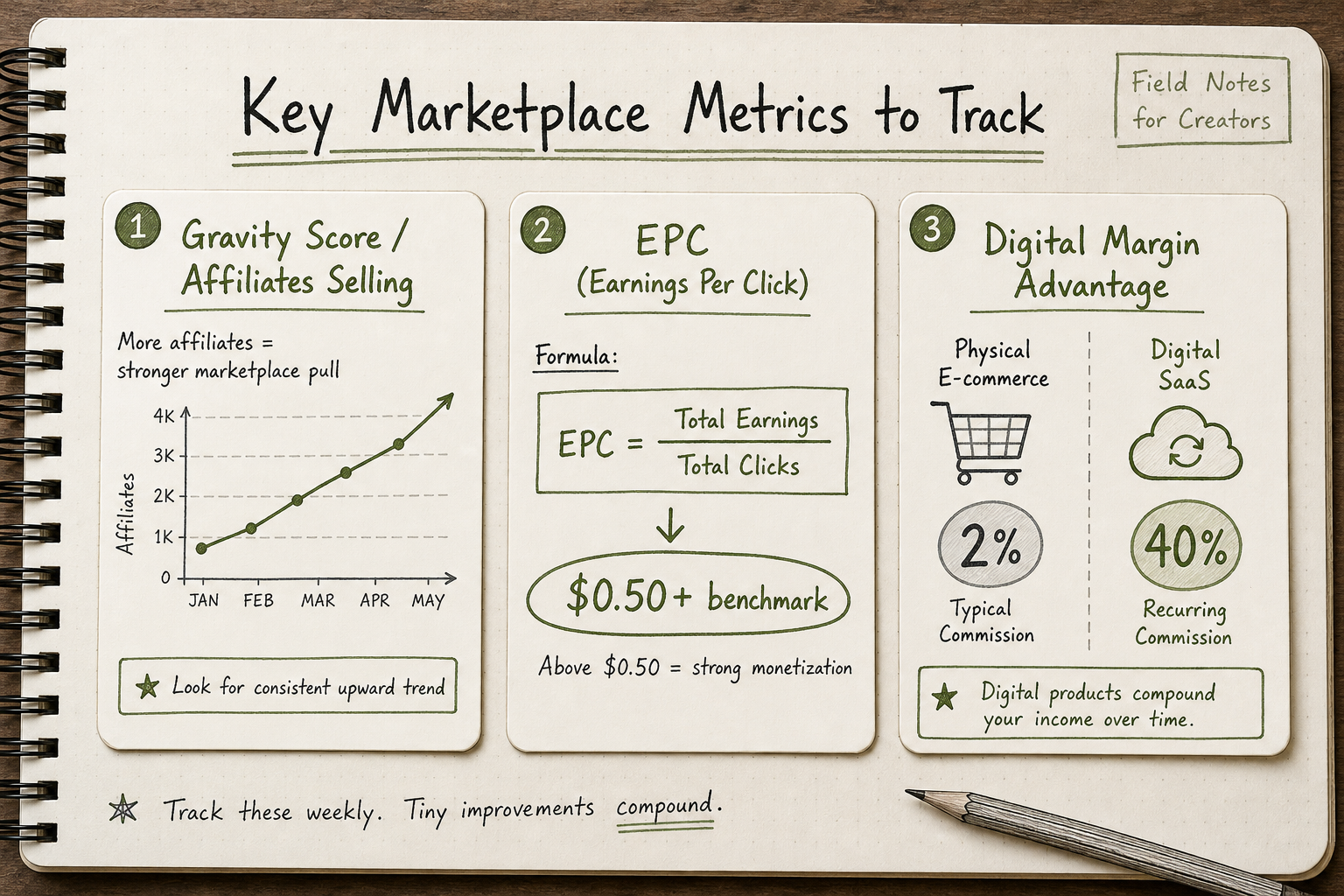
If your goal is to find digital products—ebooks, courses, specialized software, and templates—marketplaces like ClickBank, ShareASale, or specific SaaS hubs are where you will end up. Digital products inherently offer higher commissions (often 50% to 75%) because the marginal cost of reproducing the product is zero.
 The challenge with massive marketplaces is sorting the legitimately useful products from the low-quality spam.
The Metrics That Matter
When evaluating products inside a marketplace, do not just look at the commission percentage. A 90% commission on a product that no one buys yields zero dollars. You need to evaluate the momentum of the product.
- Gravity Score (ClickBank): This metric tells you how many unique affiliates have made a sale of this product in the last 12 weeks. A high Gravity Score (e.g., above 50) means the product converts cold traffic. It is proven. A score of 0 means either the product is brand new, or the sales page is broken.
- EPC (Earnings Per Click): Common in networks like ShareASale or CJ. If a program has a $50 EPC (per 100 clicks, as it's often measured in traditional networks, meaning $0.50 per individual click), it gives you a baseline to calculate your required traffic.
- Network Ranking: Does the platform rank the merchant in the top 100 of their category?
If you find traditional networks too cumbersome and want to explore alternatives for discovering these high-ticket items, checking a Flexoffers Directory Evaluation Checklist can help you decide if you need a broader network or a niche-specific one.
The Tool Evaluation Checklist for Side Hustlers
When deciding which software, aggregator, or network to incorporate into your side hustle tech stack, run it through this strict evaluation checklist.
1. The "Time to Value" Assessment
- Can I search without an account? If a platform requires a mandatory demo call or a complex application just to view the directory, abandon it. You do not have time for enterprise sales cycles.
- Are payout terms immediately visible? You should be able to see the commission rate, cookie life, and payment method (PayPal, Wire, ACH) on the search results page.
- Is there an active filtering system? Can you filter by "SaaS," "Recurring Commission," and "Minimum 30% payout"?
2. The Data Freshness Test
- Are the programs actually active? Nothing is worse than spending three hours writing a review for a software tool only to find out they sunset their affiliate program in 2024. A good tool actively prunes dead links.
- Do they highlight emerging programs? The most profitable products are often new software tools that are aggressively acquiring users and are willing to pay massive bounties to early affiliates. Does the tool have a "New" or "Trending" section?
3. The Integration and Output Check
- Can I export the data? If you are building a content calendar in Notion or Airtable, can you easily copy or export the merchant details from the discovery tool into your workspace?
- Is the interface distraction-free? Cluttered interfaces full of display ads and conflicting navigation menus slow down your research phase.
For a deeper dive into how different tools stack up against each other for creators specifically, you might review the Affililist Vs Taprefer Which Is Better for Creators Source Guide.
The Product Evaluation Checklist (Once You Find an Opportunity)
Finding a tool that lists affiliate programs is only step one. Step two is evaluating the actual product to ensure it is worth your limited time to promote. Just because a SaaS company offers a 40% recurring commission doesn't mean you should dedicate a YouTube video to it.
Run the product itself through this checklist:
1. The Earnings Potential
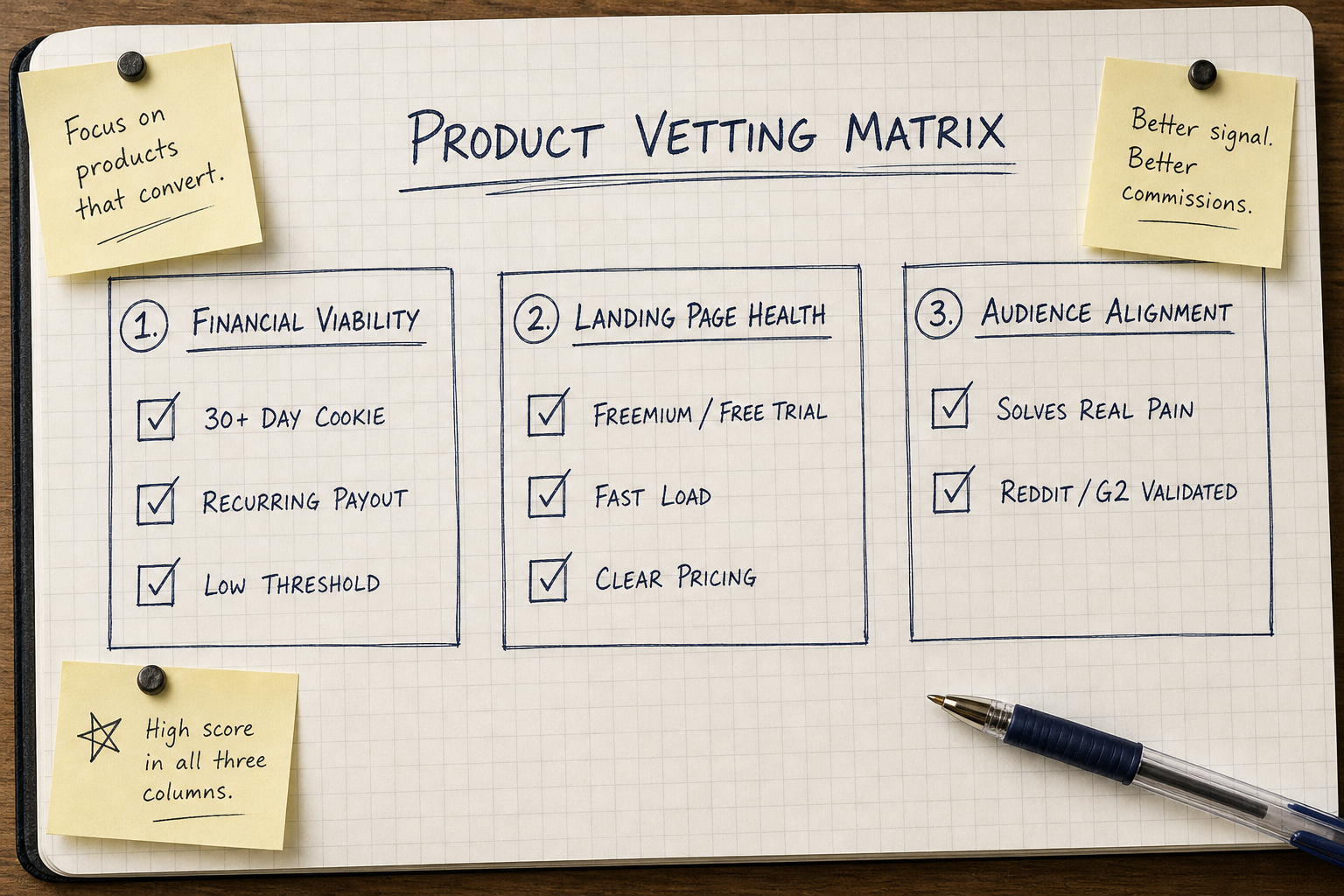
- What is the Cookie Duration? A 24-hour cookie (like Amazon) requires you to capture impulse buys. A 90-day or 120-day cookie (common in B2B SaaS) allows you to capture sales even if the user takes a month to get approval from their boss. Look for 30+ days.
- Is the Commission Recurring? For side hustlers, recurring revenue is the holy grail. Selling a $50/month software subscription that pays 30% recurring means you earn $15 every month for the lifetime of that customer. Sell it once, get paid for years.
- Is there a minimum payout threshold? If a program pays a $10 commission but requires you to hit a $500 threshold before they issue a payout, you might be waiting a year to see that money. Look for programs with $50 or lower thresholds.
2. The Conversion Environment
- Does the product have a modern, high-converting landing page? Send yourself to the merchant's homepage. Does it load fast? Is the pricing clear? If their website looks untrustworthy, your audience won't buy, regardless of how good your content is.
- Is there a frictionless signup process? Products with a "Free Trial" or "Freemium" tier convert significantly higher for affiliates than products requiring a credit card upfront. You get the audience in the door for free, and the merchant's email marketing team does the heavy lifting to convert them to paid.
- What is the refund rate? In networks that display this data, high refund rates (above 10%) indicate a poor product. You will lose those commissions.
3. The Brand and Market Fit
- Does this solve a painful problem for my specific audience? Do not promote crypto tools to a gardening newsletter just because the payouts are high.
- Is the brand reputable? Search for the product on Trustpilot or Reddit. If the consensus is that the software is buggy and customer support is non-existent, promoting it will destroy your credibility.
If you are specifically hunting for software, utilizing a Findaffiliates for High Paying Software Source Guide can help you hone in on the best B2B opportunities.
Myth-Busting: You Do Not Need Enterprise SEO Tools to Find Good Products
There is a pervasive myth in the affiliate marketing community that you must spend $100 to $200 a month on enterprise SEO tools (like Ahrefs or Semrush) to reverse-engineer competitor websites and find the "secret" high-paying products they are promoting.
While reverse-engineering competitor backlink profiles is a fantastic strategy for finding keywords, it is a remarkably slow and expensive way to find affiliate programs.
Competitor analysis requires you to comb through hundreds of outbound links manually, identify which ones are masked affiliate links, guess which network they are using, and then try to track down the signup page.
As a side hustler, your budget is better spent on hosting and content production. A free, open-access directory like AffiliList gives you the actual data—the networks, the commissions, the categories—in seconds, without the need to parse through competitor sitemaps.
If you want to understand how dedicated directories compare to some of the legacy discovery methods, you can read the Affiliate Watch to Find Programs Evaluation Checklist.
A Side Hustle Scenario: Finding a High-Paying Software Affiliate
Let’s walk through a concrete scenario to illustrate how a side hustler actually applies these tools and checklists in the real world.
Imagine you run a side hustle as a freelance graphic designer, and you have a small newsletter where you share design tips with 1,500 subscribers. You want to monetize the newsletter without plastering it with generic display ads.
Step 1: Identify the Audience's Pain Point Your audience struggles with invoicing and project management. They are currently using messy spreadsheets.
Step 2: Use an Aggregator for Discovery Instead of Googling "freelance invoice software affiliate programs" and reading ten biased blog posts, you go directly to an aggregator like AffiliList.
Step 3: Apply the Filters You navigate to the "Business" or "Finance" software tags. You apply a filter to only show programs offering Recurring Commissions.
Step 4: Evaluate the Options The tool surfaces five different invoicing platforms.
- Platform A pays a $100 flat bounty.
- Platform B pays 20% recurring.
- Platform C pays 30% recurring, but has a 7-day cookie.
- Platform D pays 30% recurring, has a 90-day cookie, and integrates via PartnerStack.
Step 5: Run the Product Checklist Platform D looks the best on paper. You click through to their website. They have a sleek UI, a 14-day free trial (no credit card required), and excellent reviews on G2.
Step 6: Execution You apply for Platform D's program, grab your link, and write a detailed tutorial in your newsletter titled: "How I automated my freelance invoicing and reclaimed 3 hours a week."
Because you used a centralized discovery tool, the research phase took 15 minutes instead of three days. Because you evaluated the cookie life and conversion environment, your clicks turn into trials, and the trials turn into recurring monthly revenue.
For those looking to replicate this specific software-hunting workflow, the Findaffiliates for High Paying Software Source Page for Affiliate Marketers, Content provides additional context on streamlining the process.
Expanding Your Reach: Avoiding Program Dependency
One critical failure mode for side hustlers is finding one great product via a discovery tool, building their entire site around it, and then watching their income vanish overnight when the merchant suddenly closes their affiliate program.
To mitigate this, you must use your discovery tools continually, not just once.
If you are promoting a specific email marketing software, you should periodically check your aggregator to see if a competitor has launched a more lucrative program. If a new tool enters the market offering a 50% commission to steal market share from established players, you want to be the first to review it.
Tools like AffiliList allow you to stay updated on emerging opportunities. By making discovery a monthly habit rather than a one-time event, you build resilience into your affiliate portfolio. You can easily cross-reference alternatives by reading the AffiliList for Findaffiliates for High Paying Software guide.
Moreover, exploring different types of directories ensures you aren't stuck in an echo chamber. Reviewing Other Directories Like Affiverse for Partner Programs Evaluation Checklist will help you understand the breadth of what's available across different verticals.
Frequently Asked Questions (FAQ)
How do I know if an affiliate product will actually convert before I promote it?
While you can never be 100% certain, you can heavily skew the odds in your favor by looking at the merchant's conversion environment. Look for a frictionless entry point (a free trial or freemium model). Furthermore, check network metrics like EPC (Earnings Per Click) if available. A healthy EPC indicates that other affiliates are actively making money with the same traffic.
Should side hustlers focus on high-ticket items or high-volume items?
With limited time, you generally cannot produce the sheer volume of content required to make a living off 2% E-commerce commissions. Side hustlers should heavily index toward high-ticket items (where one sale nets $100+) or recurring software subscriptions. It is much easier to find 10 people to buy a high-quality SaaS product than to find 1,000 people to buy a $15 physical product on Amazon.
Is it better to join independent programs or large affiliate networks?
Large networks (like Impact or ShareASale) are great because they centralize your tax forms and payouts. However, many independent SaaS companies run their own programs using software like Rewardful or FirstPromoter. Do not restrict yourself to one or the other. Use an aggregator tool that lists both network-hosted and independently-hosted programs so you can choose based on the commission rate, not the hosting platform.
Finalizing Your Discovery Workflow
Finding profitable affiliate products should not feel like finding a needle in a haystack. It should be a repeatable, predictable system.
By aggressively filtering out the noise, leveraging transparent directories that focus on high-margin SaaS and digital goods, and rigorously applying an evaluation checklist to every potential product, you protect your most valuable asset: your time.
Stop treating affiliate discovery as a manual scraping exercise. Treat it like a data problem, equip yourself with the right aggregator tools, and focus your energy on what actually moves the needle—creating content that converts.