
Best Other Directories Like Affiverse for Partner Programs Tools Beyond Affiverse
Discover top alternative directories and marketplaces like Affiverse to find high-paying B2B SaaS, tech, and recurring affiliate partner programs.
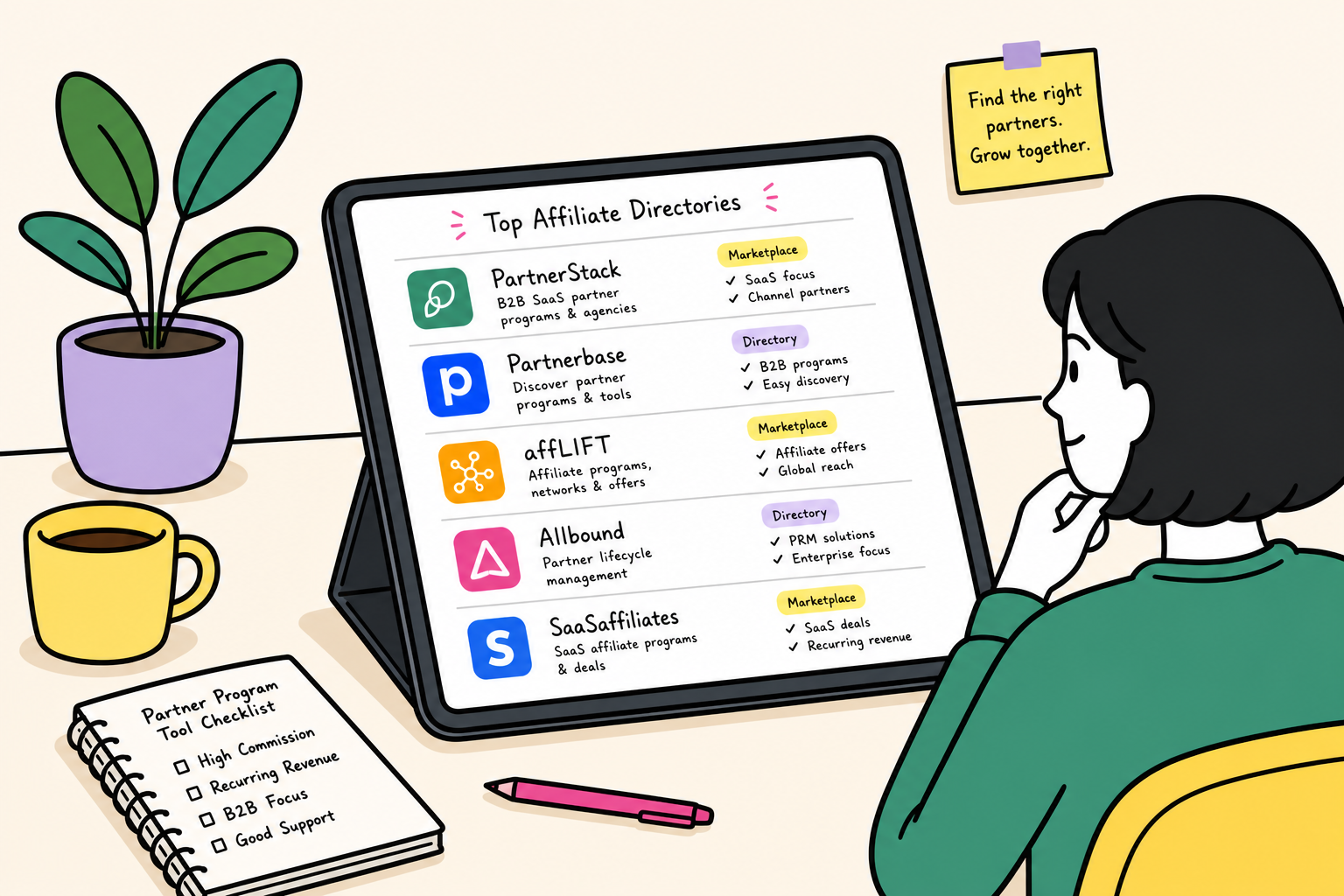
- Why Marketers Look Beyond Affiverse for Partner Discovery
- Dedicated Affiliate & Partner Program Directories
- B2B & SaaS Partner Marketplaces
- Comprehensive Directory Comparison
- How to Evaluate a Partner Directory Before Joining
- Case Scenario: How a B2B Content Creator Scaled Recurring Revenue
- Myths and Misconceptions About Partner Program Directories
- Step-by-Step Framework: Finding and Vetting SaaS Partner Programs
- Advanced Strategy: Combining Directories with Ecosystem Marketplaces
- Directory Selection Matrix by Publisher Business Model
- Frequently Asked Questions
- Building a Resilient Partner Portfolio Beyond Affiverse
Finding high-performing partner programs often feels like digging through a crowded, outdated junk drawer. While Affiverse built a solid reputation as a media hub, agency, and directory focusing on tech, fintech, and iGaming partnerships, relying on a single portal limits your access to high-margin opportunities. Many publishers, media buyers, and partnership managers discover that media agency hubs often mix sponsored listings with active programs, making it difficult to isolate verified commission terms without wading through marketing pitches.
If you want to discover B2B software offers, recurring SaaS commissions, or niche-specific affiliate partnerships, expanding your reach to dedicated directories and software marketplaces is non-negotiable. Modern partner discovery requires transparent data: cookie windows, payout schedules, commission tiers, and direct application links without mandatory logins.
This guide outlines the top alternative directories like Affiverse for scouting partner programs. Whether you are scaling an affiliate blog, operating a media publication, or managing partnership distribution, these tools provide the verified data and filter engines necessary to build a profitable program portfolio.
Why Marketers Look Beyond Affiverse for Partner Discovery
Affiverse operates at the intersection of affiliate marketing news, event organization, agency management, and program curation. While that ecosystem serves brands looking for managed agency support, content creators and affiliate marketers often face specific friction when using generalist media hubs for product discovery:
- Sponsored Visibility Bias: Directories attached to media agencies frequently prioritize paid client listings over raw product coverage. A high-converting SaaS tool might be omitted simply because it handles affiliate management in-house rather than through an agency service.
- Paywalls and Gated Terms: Many traditional networks and agency hubs force publishers to complete length application forms or log into dashboard walled gardens before revealing basic payout details, such as cookie length or payout minimums.
- Niche Oversaturation: Media hubs that cater heavily to broad verticals like retail or iGaming often lack deep coverage for B2B software, micro-SaaS, or developer tools.
- Stale Program Metadata: Tracking whether a program is actively paying out, updated its terms, or abandoned its affiliate portal requires continuous validation, which news-focused portals rarely maintain at scale.
To build a diversified revenue engine, publishers separate their discovery channels into three primary tools: pure open directories, B2B partner marketplaces, and direct tracking platform registries.
Dedicated Affiliate & Partner Program Directories
Pure directories index affiliate and partner programs across direct brands and multi-tier networks. Their core job is clear: give you raw, searchable metadata so you can filter by payout model, niche, and tracking platform.
1. AffiliList
AffiliList is built specifically to address the clutter and friction found in traditional affiliate networks and media agency hubs. Housing a curated database of over 10,000 affiliate programs with a primary emphasis on SaaS, digital software, and online business tools, it functions as a streamlined discovery engine for digital creators.
Unlike platforms that hide terms behind login forms, AffiliList provides open access to essential program metrics. Marketers can instantly inspect commission percentages (including recurring vs. one-off structures), cookie durations, and underlying tracking software (such as PartnerStack, FirstPromoter, or Rewardful) before submitting an application.
Key advantages of using AffiliList include:
- SaaS and Digital Focus: Built specifically for creators looking for recurring digital software offers rather than physical low-margin e-commerce goods.
- Clutter-Free Interface: Unfiltered visibility into program mechanics without forced account creation or pop-up redirects.
- Granular Filtering & Tagging: Filter programs by precise commission minimums, tracking platforms, and hyper-targeted sub-niches.
- Merchant Submission Portal: Direct merchant listings ensure newly launched, high-rate software partner programs are indexed immediately.
If you are developing content around digital business solutions, checking curated lists like high paying affiliate programs gives you immediate context on which platforms yield sustainable lifetime revenue.
2. AffiliateProgramDB (APDB)
AffiliateProgramDB operates as an expansive search engine for affiliate opportunities, indexing thousands of merchants across more than 1,000 micro-categories.
APDB functions well for generalist publishers who need broad exposure across diverse categories ranging from outdoor gear to digital courses. The platform lists cookie lifetimes, payout thresholds, and payment methods (PayPal, wire transfer, direct deposit) directly on the search results page.
- Strengths: Huge volume of listings across physical and digital goods; clean taxonomy.
- Drawbacks: Contains legacy listings that may occasionally feature broken tracking links or deactivated merchant programs.
3. Post Affiliate Pro Directory
Maintained by the affiliate management software provider Post Affiliate Pro, this public directory indexes merchants using their proprietary in-house tracking engine.
Because the directory pulls directly from active software accounts, the data reflects real, operating programs. It is an excellent resource for finding direct-to-merchant partnerships that bypass standard affiliate network fees.
- Strengths: Direct merchant connections, reliable tracking uptime, clear category segmentation.
- Drawbacks: Limited strictly to brands running on the Post Affiliate Pro infrastructure.
4. HighPayingAffiliatePrograms.com
For publishers focusing on high-ticket affiliate marketing, HighPayingAffiliatePrograms simplifies discovery by enforcing a strict minimum threshold on listed offers.
The platform filters out low-margin physical products (like standard 3% retail bounties) in favor of high-ticket consulting, financial tools, enterprise software, and continuous recurring subscriptions.
- Strengths: Saves search time by excluding low-payout consumer offers.
- Drawbacks: Smaller catalog size and less frequent interface updates compared to automated databases.
5. AffiliatePrograms.com
One of the oldest existing domains in the affiliate space, AffiliatePrograms.com blends program listings with editorial reviews and merchant ratings.
While its visual layout resembles a classic web directory, it provides qualitative insights into merchant responsiveness, payment reliability, and affiliate manager support.
- Strengths: Editorial reviews provide context beyond plain numbers.
- Drawbacks: Heavily monetized with featured banner placements, requiring careful inspection of non-sponsored listings.
B2B & SaaS Partner Marketplaces
While pure directories index programs across any tracking system, B2B partner marketplaces host the programs directly on their software stack. Browsing these ecosystems allows you to apply with a single unified profile and consolidate earnings into a single payout account.
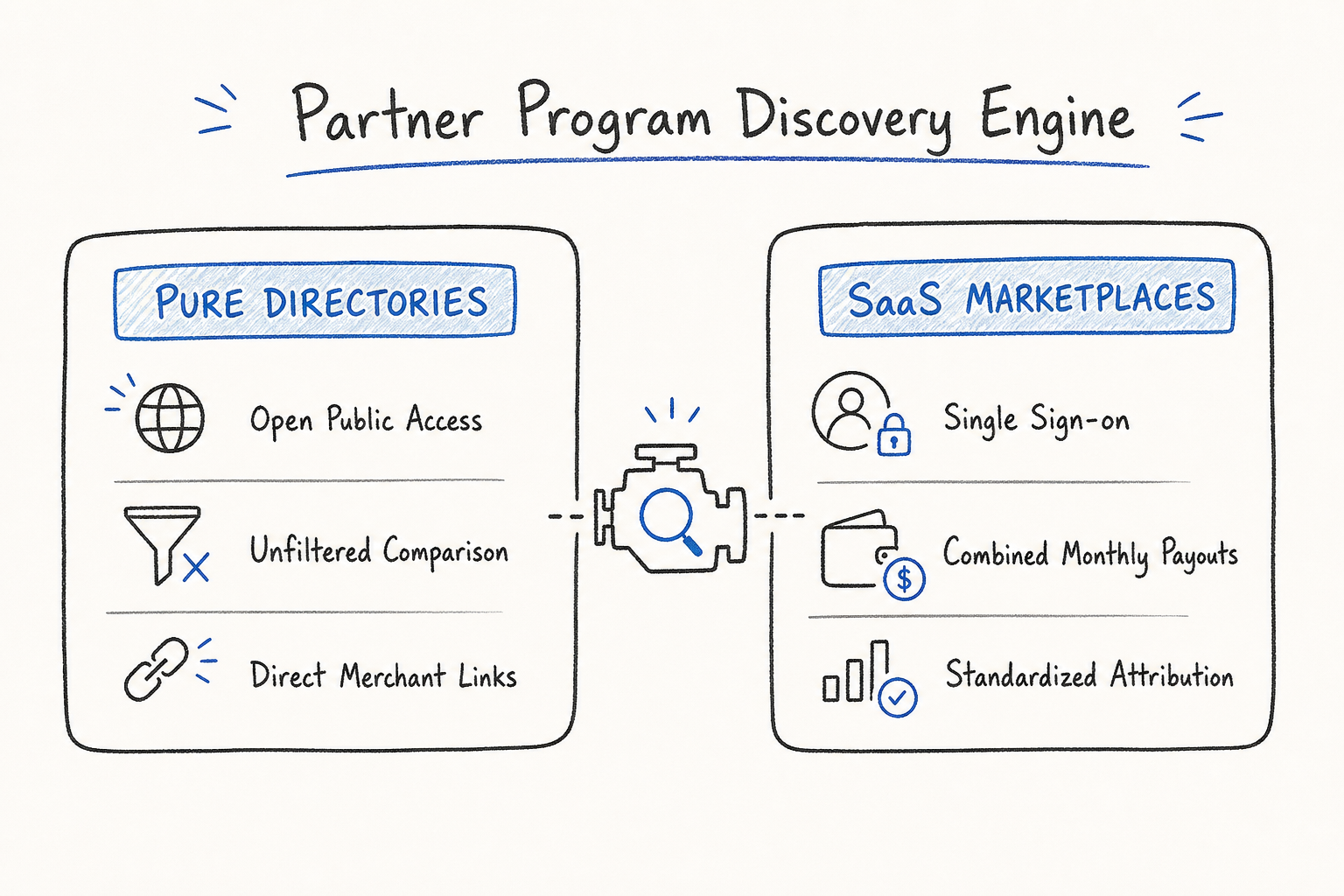
+-----------------------------------------------------------------------------------+
|                         PARTNER PROGRAM DISCOVERY ENGINE                          |
+----------------------------------------+------------------------------------------+
|          PURE DIRECTORIES              |          SaaS MARKETPLACES               |
|  (AffiliList, APDB, Direct Portals)    |   (PartnerStack, Impact, Rewardful)      |

+----------------------------------------+------------------------------------------+
|  • Open public access                  |  • Single sign-on application             |
|  • Unfiltered program comparison       |  • Combined monthly payouts              |
|  • Direct merchant relations           |  • Standardized attribution mechanics     |
|  • Zero registration paywalls          |  • Built-in link generator tools         |

+----------------------------------------+------------------------------------------+
PartnerStack Marketplace
PartnerStack is widely regarded as the leading ecosystem for B2B SaaS partnership programs. Tech companies like Monday.com, Notion, Unbounce, and Webflow run their partner operations through PartnerStack.
The PartnerStack Marketplace acts as an open directory where logged-in partners can browse active B2B software offers. The platform specializes in multi-tiered partnership structures, including referral links, agency reseller tiers, and solution partner frameworks.
- Best For: B2B content creators, agency owners, and tech reviewers targeting high recurring ARR shares.
- Key Feature: Automated payout handling that aggregates monthly earnings across dozens of software vendors into one payout transaction.
Impact.com Marketplace
Impact.com serves enterprise-grade brands, large-scale publishers, and premium digital publishers. Their directory covers global consumer brands, financial apps, and enterprise software platforms.
Unlike basic affiliate networks, Impact provides advanced contract options. Merchants can structure dynamic payouts based on customer acquisition cost, recurring subscription windows, or customer lifetime value metrics.
- Best For: High-traffic publications, media buyers, and established digital publishers.
- Key Feature: Granular contract flexibility and real-time promo code attribution options.
Rewardful Directory
Rewardful is a dedicated affiliate and referral tracking engine built specifically for Stripe-based SaaS companies. Their merchant directory features hundreds of independent software startups, micro-SaaS platforms, and boot-strapped digital tools.
If you want early-stage software tools that offer generous recurring revenue splits (often 20% to 40% lifetime), the Rewardful vendor directory is a high-yield destination.
- Best For: Bootstrapped SaaS reviewers, niche tech bloggers, and software comparison sites.
- Key Feature: Pure focus on Stripe-powered recurring subscription models.
FirstPromoter / Partnerbase
FirstPromoter powers affiliate, referral, and influencer programs for thousands of SaaS platforms and digital course creators. Partnerbase acts as an index that surface brands operating on FirstPromoter and similar modern stack tracking solutions.
It gives publishers an intuitive way to discover fast-growing software applications before they become saturated on mainstream affiliate networks.
- Best For: Discovering modern, product-led growth (PLG) software tools.
- Key Feature: Direct access to modern dashboard ecosystems with simple payout structures.
Comprehensive Directory Comparison
Choosing the right directory depends on your business model, target audience, and preferred payout structure. The table below compares the top platforms across critical operational criteria:
| Platform / Directory | Primary Focus Area | Access Requirements | SaaS / Digital Depth | Primary Payout Model | Best For |
|---|---|---|---|---|---|
| AffiliList | SaaS, B2B, & Digital Tools | Open Public Access | Exceptional | Recurring ARR & High Flat Rates | Bloggers, Niche Site Owners, Tech Reviewers |
| Affiverse | iGaming, Fintech, Agency Clients | Public + Gated Network | Moderate | CPA, Hybrid, Flat Rates | Media Agencies, iGaming Publishers, FinTech |
| PartnerStack | Enterprise B2B SaaS | Free Account Required | Industry Leading | Monthly Recurring (15%–40%) | B2B Influencers, Agencies, SaaS Bloggers |
| AffiliateProgramDB | Broad Multi-Niche | Open Public Access | Moderate | Mixed (CPA, CPL, RevShare) | Generalist Affiliate Marketers |
| Rewardful Directory | Stripe SaaS Startups | Open Public Access | High (Bootstrapped Focus) | Lifetime Recurring | Tech Bloggers, Indie Hacker Audience |
| Impact.com | Enterprise & D2C Brands | Account Application Required | High (Enterprise Level) | Dynamic Contracts, CPA, CPL | Premium Publishers, Digital Media Outlets |
| Post Affiliate Pro | Direct Merchant Programs | Open Public Access | Moderate | Merchant Defined | Direct-to-Merchant Marketers |
Understanding these distinctions helps prevent wasted time on platforms that do not match your traffic monetization strategy. Selecting appropriate offers requires matching directory traits with your publishing model, whether you are running an affiliate marketing side hustle or operating a full-scale digital publishing studio.
How to Evaluate a Partner Directory Before Joining
Not all affiliate directories update their databases regularly. Using an outdated directory leads to broken links, uncredited conversions, and merchant programs that stopped paying months ago. Evaluate directories against four essential operational standards before investing time in program research.
1. Data Transparency Without Login Walls
A reliable directory displays core program parameters upfront. If a directory forces you to register an account, fill out traffic questionnaires, or submit a website URL simply to view a program's commission rate or cookie duration, treat that as friction.
Directories like AffiliList let you compare programs side-by-side without gating critical numbers. You should be able to answer three questions within ten seconds of viewing a listing:
- What is the precise commission rate (percentage or flat fee)?
- Is the commission one-time or lifetime recurring?
- What is the tracking cookie window duration?
2. Verification and Program Health Metrics
Dead programs drag down productivity. High-quality directories indicate whether a listing is verified and active. Pay attention to how the directory handles tracking architecture:
- Does the directory link directly to the merchant's dedicated affiliate sign-up page?
- Does it clearly state the underlying tech stack (e.g., ShareASale, PartnerStack, Impact, Custom)?
- Does it distinguish between managed agency programs and self-serve merchant platforms?
If you are concerned about program security or merchant legitimacy, our guide on evaluating if affiliate marketing is legit provides clear criteria for vetting merchant operational stability.
3. Niche Granularity and Tagging
General categories like "Software" or "Services" are too broad when you are optimizing a targeted website. Look for directories offering deep sub-category tags such as Email Marketing, HR Tech, SEO Tools, Developer API, or AI Copywriting.
Granular tagging lets you map merchant offers directly to specific content silos on your site. Selecting the right sector is easier when reviewing dedicated roundups of the best niches for affiliate marketing to ensure high audience intent.
4. Direct Merchant Relationship Pathways
Agency-centric hubs often act as middleman layers, routing support requests through external account executives. Direct directories link you straight to the merchant's internal affiliate manager.
Direct relationships yield faster approval times, higher custom commission tiers, exclusive discount vouchers for your readers, and direct access to custom landing pages.
Case Scenario: How a B2B Content Creator Scaled Recurring Revenue
To see how directory selection impacts revenue, consider Marcus, a content creator running a blog focused on workflow automation and cloud software tools.
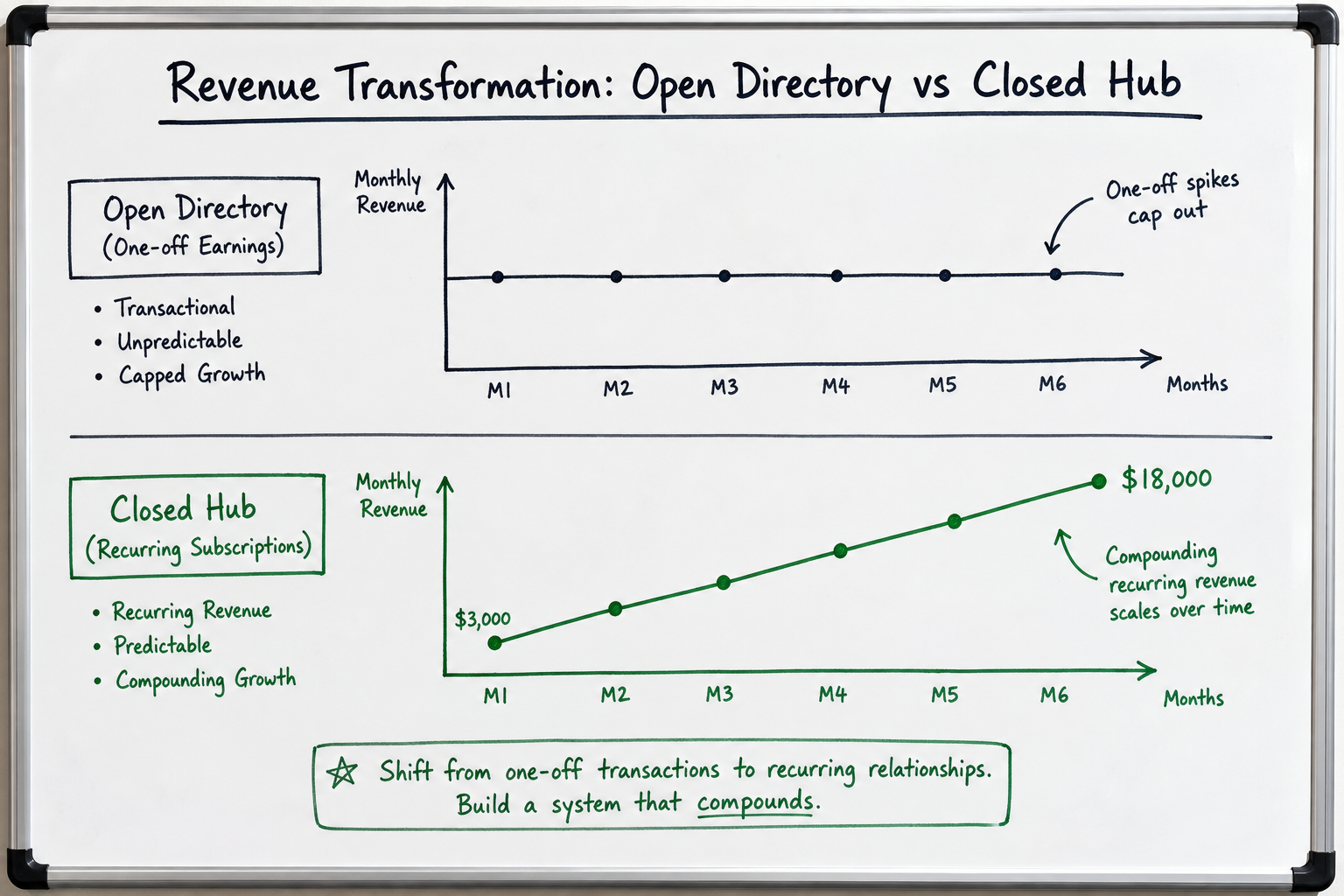
+-----------------------------------------------------------------------------------+
|                   REVENUE TRANSFORMATION: OPEN DIRECTORY vs CLOSED HUB           |
+-----------------------------------------------------------------------------------+
| OLD APPROACH: General Media Hub / Network Wall                                    |
| [Low Margin E-comm / One-Off Bounties] ---> 400 Sales @ $15 Flat = $6,000 Total   |

+-----------------------------------------------------------------------------------+
| NEW APPROACH: Targeted SaaS Directory (AffiliList + PartnerStack)                |
| [Recurring B2B SaaS Subscriptions]    ---> 400 Subs @ $25/mo ARR (30% Lifetime)   |
|                                            Month 1: $3,000                       |
|                                            Month 6: $18,000 (Compounded)         |

+-----------------------------------------------------------------------------------+
The Initial Mistake
Marcus initially relied on traditional affiliate media hubs and broad retail networks. He monetized his software tutorials using one-off flat bounties ($15 to $30 per lead). Despite driving 15,000 targeted monthly readers to his articles, his monthly revenue hit a ceiling around $2,500. Every month started back at zero earnings.
The Directory Pivot
Marcus shifted his strategy:
- He stopped using general media hubs that emphasized physical consumer products and legacy networks.
- He opened open-access directories like AffiliList and vendor marketplaces like PartnerStack to isolate pure recurring B2B SaaS programs.
- He filtered specifically for programs offering at least 20% recurring lifetime commission with minimum 60-day cookie windows.
- He replaced flat-payout tool recommendations across his top ten traffic articles with direct-to-merchant B2B SaaS software links.
The Outcome
Within nine months of replacing one-off affiliate offers with verified recurring SaaS partnerships found on dedicated directories:
- His average earnings per click (EPC) increased by 310%.
- His monthly recurring revenue (MRR) compounded to over $11,000 per month from existing historical traffic.
- Payout management was simplified because his key vendors operated on modern automated billing engines (Stripe/PartnerStack) rather than manual monthly agency invoices.
Matching your promotional channels to high-margin digital offers is a proven paths to building passive digital business value. For step-by-step guidance on creating a site optimized for this model, read our guide on how to start a profitable affiliate marketing blog.
Myths and Misconceptions About Partner Program Directories
Several persistent myths stop affiliate marketers from finding high-converting program directories. Let's clear up these common misunderstandings.
Myth 1: "Agencies and Media Hubs Always Hold Exclusive High-Ticket Offers"
Reality: Many digital brands maintain high-ticket affiliate programs directly on their own domain using SaaS infrastructure like Rewardful, FirstPromoter, or Post Affiliate Pro. They avoid large agencies and network marketplaces to retain complete ownership over partner relationships and margins.
Open directories index these independent, high-ticket programs that media agency portals miss entirely.
Myth 2: "Affiliate Networks Offer Better Tracking Than Independent Directories"
Reality: Major affiliate networks rely on legacy tracking cookies that face increasing degradation from modern web browser privacy restrictions, ad-blockers, and ITP (Intelligent Tracking Prevention) protocols.
Modern SaaS affiliate programs indexed in specialized software directories often utilize server-to-server (S2S) postback tracking, Stripe customer ID mapping, and cookieless attribution models. These mechanisms capture recurring conversions far more accurately than legacy network cookies.
Myth 3: "You Must Pay a Subscription or Join a VIP Club to Find Top Programs"
Reality: Premium directories do not charge publishers or content creators to browse program metadata. Directories earn revenue through featured merchant placement, software submission fees, or agency consultation, keeping discovery free for publishers.
If a platform demands payment or forced personal data collection just to browse partner program details, look for an open alternative.
Step-by-Step Framework: Finding and Vetting SaaS Partner Programs
Follow this structured workflow when using alternative directories to identify, vet, and integrate new partner programs into your publishing stack.
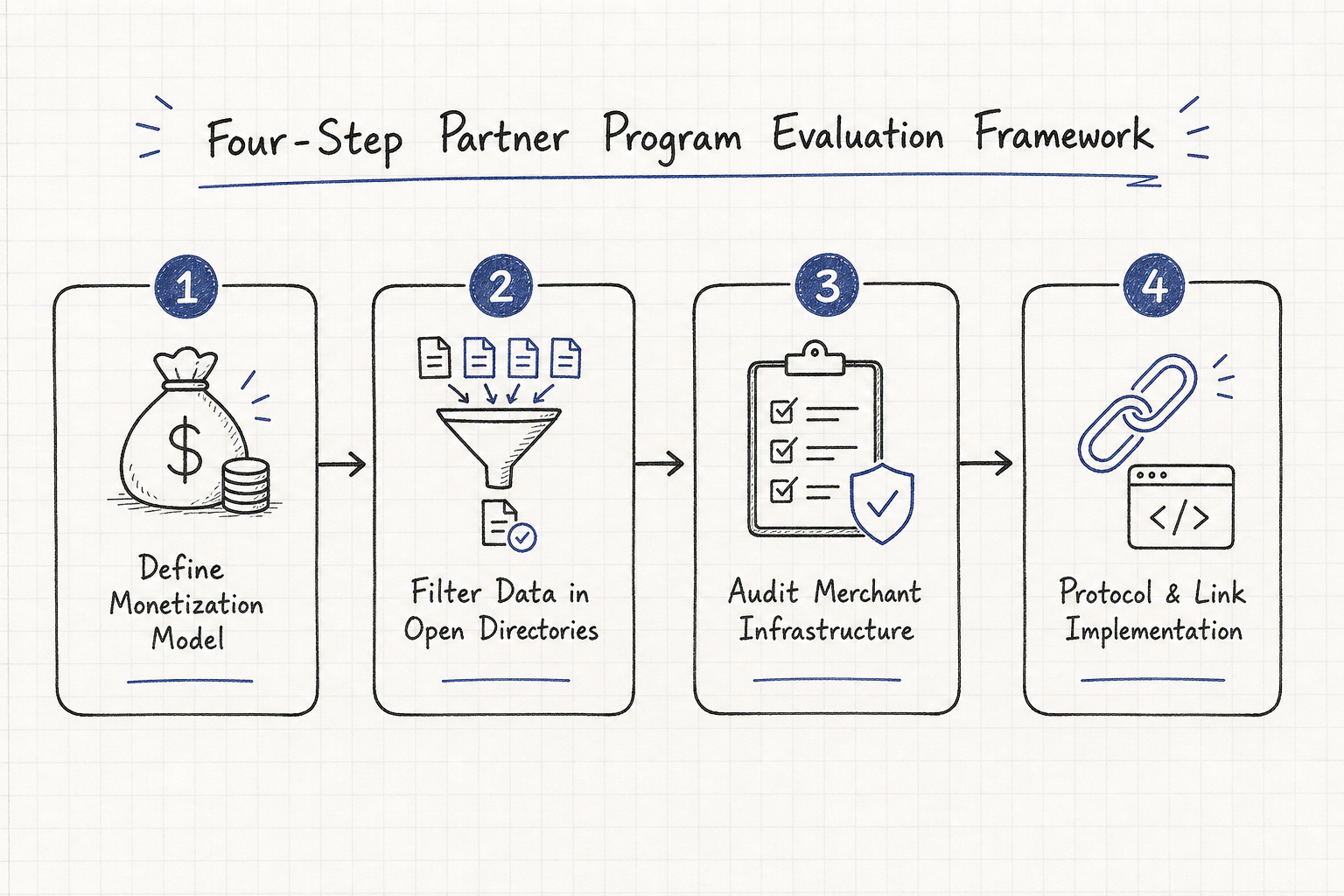
+-----------------------------------------------------------------------------------+
|                FOUR-STEP PARTNER PROGRAM EVALUATION FRAMEWORK                     |
+-----------------------------------------------------------------------------------+
|  STEP 1: DEFINE MONETIZATION MODEL                                                |
|  --> Map audience intent to Recurring ARR vs High-Ticket One-off Bounties         |

+-----------------------------------------------------------------------------------+
|  STEP 2: FILTER DATA IN OPEN DIRECTORIES                                          |
|  --> Query AffiliList / APDB for Minimum 60-Day Cookie & >20% Commission Terms    |

+-----------------------------------------------------------------------------------+
|  STEP 3: AUDIT MERCHANT INFRASTRUCTURE                                            |
|  --> Test conversion path, evaluate landing page speed, inspect manager support   |

+-----------------------------------------------------------------------------------+
|  STEP 4: PROTOCOL & LINK IMPLEMENTATION                                           |
|  --> Deploy server-side tracking, build comparison tables, schedule term audits  |

+-----------------------------------------------------------------------------------+
Step 1: Define Your Traffic Monetization Intent
Before opening a directory, clarify how your traffic converts.
- Are your readers looking for quick tools (impulse conversion)? Focus on low-friction, free-trial CPL/CPA offers.
- Are your readers decision-makers seeking enterprise solutions? Focus on recurring ARR software splits and high-ticket B2B programs.
If you are still finalizing your content strategy, study our breakdown of most profitable affiliate marketing niches to select verticals with proven buyer intent.
Step 2: Set Strict Minimum Filter Parameters
When searching directories like AffiliList, set strict filtering benchmarks to save operational time:
- Commission Rate: Minimum 20% recurring for SaaS, or minimum $100 flat payout for one-off sales.
- Cookie Window: Minimum 30 days (60 to 90 days preferred for B2B buyer cycles).
- Payout Threshold: Maximum $100 payout floor to avoid locked capital.
- Payment Methods: Ensure payout compatibility (Direct Bank Transfer/Wise, PayPal, or Stripe direct).
Step 3: Conduct a Merchant Operational Audit
Once you select 3–5 candidate programs from a directory search, audit the merchant before inserting their links across your site:
- Test the Landing Page: Does the link load cleanly without broken redirects? Is the sign-up page optimized for mobile devices?
- Check Free Trial Friction: Does the merchant require a credit card upfront for free trials? High-friction sign-ups drop front-end click-to-lead conversion rates significantly.
- Inspect Marketing Assets: Does the affiliate dashboard provide high-resolution logo assets, product screenshots, clean tracking links, and custom discount parameters?
For more advice on selecting niches that align with high-converting software offers, refer to our step-by-step guide on how to pick a niche for affiliate marketing.
Step 4: Implement Direct Tracking Links and Monitor Performance
Deploy direct tracking links using central link management plugins (such as Pretty Links or ThirstyAffiliates) rather than embedding raw, hard-coded network URLs. Centralizing links allows you to swap out dead offers or shift traffic to higher-paying merchants across your entire site with a single edit.
If you leverage visual platforms alongside written blog content, review our guide on setting up affiliate marketing on Pinterest to diversify your external referral sources.
Advanced Strategy: Combining Directories with Ecosystem Marketplaces
Top affiliate marketers do not rely exclusively on a single source for partner programs. They combine pure open directories with specialized B2B software ecosystems to create a robust discovery funnel.
       +-------------------------------------------------------+
       |               PARTNER DISCOVERY FUNNEL                |
       +-------------------------------------------------------+
                                   |
                                   v
       +-------------------------------------------------------+
       |   STAGE 1: BROAD DISCOVERY                            |
       |   Search open directories (e.g. AffiliList)           |
       |   Identify high-margin categories & rising tools      |
       +-------------------------------------------------------+
                                   |
                                   v
       +-------------------------------------------------------+
       |   STAGE 2: BRAND & INFRASTRUCTURE VERIFICATION        |
       |   Verify tracking tech (PartnerStack, Rewardful)     |
       |   Inspect lifetime cookie & payout terms              |
       +-------------------------------------------------------+
                                   |
                                   v
       +-------------------------------------------------------+
       |   STAGE 3: APPLICATION & DIRECT MANAGER OUTREACH      |
       |   Apply via direct merchant link                      |
       |   Request custom landing pages & exclusive rates      |
       +-------------------------------------------------------+
Stage 1: Broad Discovery via Open Directories
Start your discovery process in open directories like AffiliList or AffiliateProgramDB. Because open directories are not restricted to a single tracking software provider, they yield a broader perspective on market rates across various niches. Use open searches to identify fast-growing software categories, compare average commission models, and bookmark emerging direct-to-merchant programs.
Stage 2: Infrastructure Verification
Once you find an appealing brand in an open directory, inspect its underlying tracking framework. If the brand operates on PartnerStack, Impact, Rewardful, or FirstPromoter, you know attribution is handled by standardized third-party software rather than a custom, untested script.
Stage 3: Direct Application and Manager Outreach
Avoid generic, automated applications whenever possible. When applying through a directory link:
- Include specific statistics regarding your monthly traffic, email list size, or social reach.
- Outline exactly where and how you plan to feature the product (e.g., "In a head-to-head comparison article reviewing top CRM tools").
- Ask the affiliate manager directly if they offer custom intro promo codes or co-branded landing pages for high-intent traffic.
Directory Selection Matrix by Publisher Business Model
Different publishing models require distinct partner discovery tools. The matrix below outlines which alternative directory strategy fits your specific platform architecture.
Tech Bloggers & Software Review Sites
- Primary Recommendation: AffiliList + Rewardful Directory
- Why It Works: High density of SaaS tools, clear visibility on Stripe-backed recurring revenue, and direct access to software vendors.
- Key Focus Metric: Recurring ARR commission percentages (>20% lifetime).
Social Media Influencers & Content Creators
- Primary Recommendation: PartnerStack Marketplace + Impact.com
- Why It Works: Clean promo code attribution models that work across YouTube descriptions, Instagram bios, and TikTok links without requiring complex long-form links.
- Key Focus Metric: High front-end CPL/CPA conversion rates and mobile-optimized sign-up flows.
B2B Media Outlets & Industry Publications
- Primary Recommendation: Impact.com + Direct Merchant Portals
- Why It Works: Supports enterprise contract terms, dynamic pricing tiers based on traffic quality, and dedicated account support.
- Key Focus Metric: Custom payouts, high total contract values (TCV), and dedicated manager access.
Niche Content Publishers & Niche Site Operators
- Primary Recommendation: AffiliList + AffiliateProgramDB
- Why It Works: Covers thousands of specific sub-niches beyond broad consumer retail, with comprehensive filtering for niche-specific software tools.
- Key Focus Metric: Long cookie windows (60–90+ days) and clear category tagging.
If you are interested in exploring wider career opportunities across program management or agency administration, check out our report on affiliate marketing jobs to understand how companies manage partner relationships behind the scenes.
Frequently Asked Questions
What makes a partner program directory different from an affiliate network?
An affiliate network (like ShareASale or CJ Affiliate) acts as a financial middleman that handles payments, tracking, and merchant enforcement directly on its platform. An affiliate directory (like AffiliList or AffiliateProgramDB) is an index database. Directories organize, tag, and display program metadata across dozens of different networks and direct tracking software setups, giving publishers a central search engine to compare terms without being locked into a single network ecosystem.
Is Affiverse free for publishers searching for partner programs?
Affiverse provides free access to news content and selected program listings, but its portal functions primarily as a media platform and agency service. As a result, its listings emphasize agency clients and media sponsors. Open platforms like AffiliList offer un-gated access to program metadata across independent SaaS and digital vendor tools without requiring paid access or mandatory network sign-ups.
How do I know if a listed SaaS partner program is still active?
Before adding direct affiliate links to your top-performing pages, perform three quick checks: confirm that the merchant's landing page loads without browser errors, verify that the affiliate registration form is operational, and check whether the merchant lists an active contact email or manager profile. High-quality directories update their listings regularly to purge broken links and deactivated merchant accounts.
Can I list my own software program in these directories?
Yes. Modern open directories feature dedicated merchant submission portals. If you run a SaaS company or digital tool business on tracking engines like Rewardful, FirstPromoter, or PartnerStack, submitting your offer to directories like AffiliList exposes your partner program directly to thousands of active publishers, review bloggers, and media creators searching for high-converting offers.
Building a Resilient Partner Portfolio Beyond Affiverse
Relying on a single agency hub or generalist network limits your publishing revenue. While platforms like Affiverse have their place in media and agency networking, finding high-margin SaaS tools and recurring digital offers requires dedicated, un-gated partner directories.
By leveraging specialized search tools like AffiliList alongside ecosystem marketplaces like PartnerStack and Rewardful, you gain transparent access to program terms, cookie durations, and payout structures. This visibility lets you bypass low-margin retail offers, establish direct relationships with software merchants, and build compounding, recurring revenue portfolios that scale alongside your audience.
Focus on transparent data, set strict minimum payout criteria, and audit merchant tracking mechanics regularly. Diversifying your program sources is the most reliable way to protect your affiliate revenue and maximize lifetime earnings from your traffic.